Outage Monitor
Monitor service disruptions across the cloud tools, vendors, and external dependencies your business relies on.
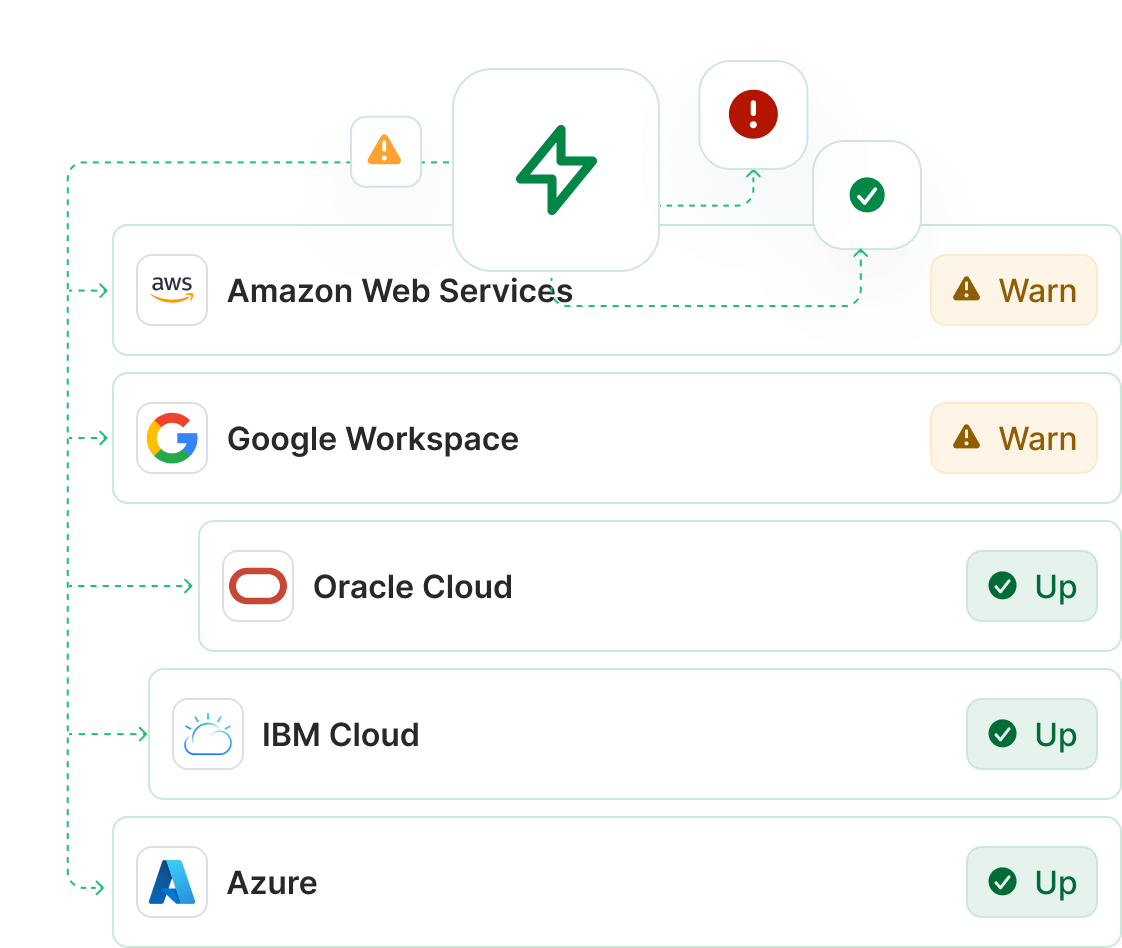
What is an outage monitor?
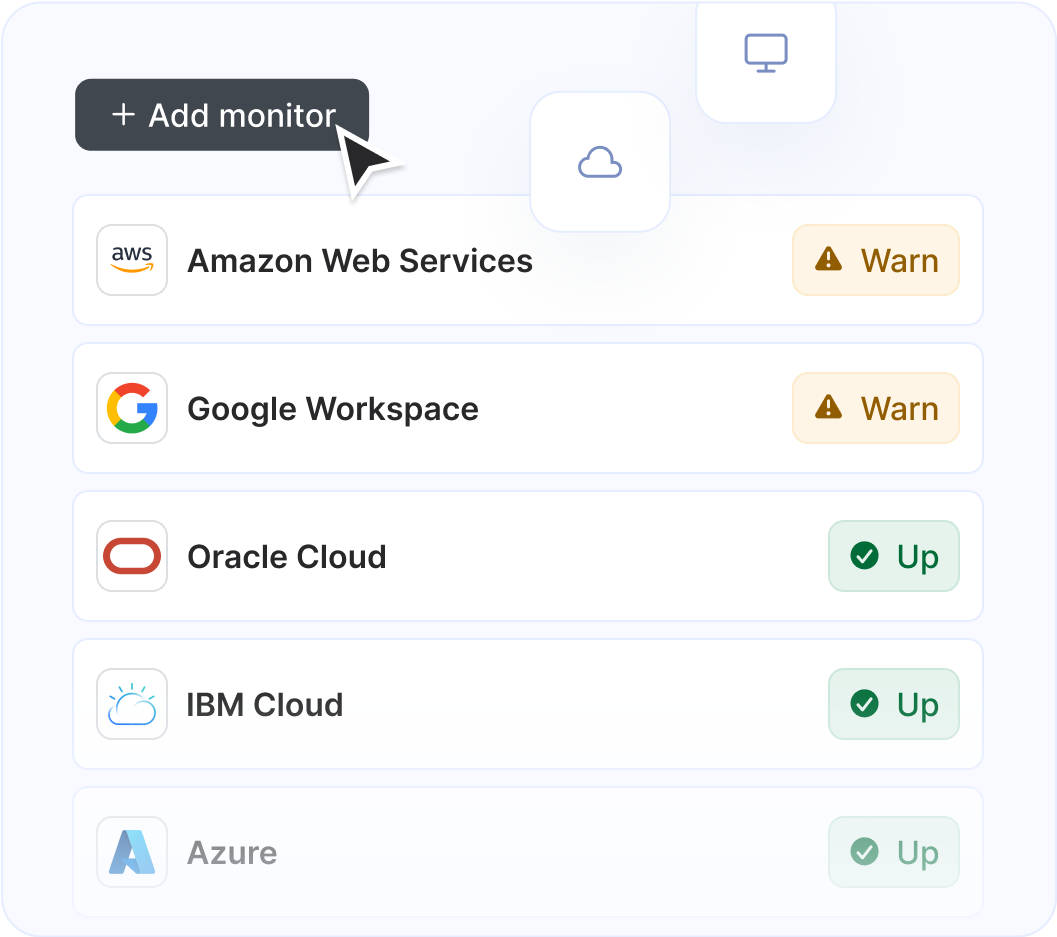
Outage monitoring is the practice of watching external services for incidents, downtime, degradation, and maintenance events. It is especially useful when your product depends on SaaS tools, cloud providers, APIs, and other vendors that can fail outside your own environment.
Insight: If your own monitoring is green but users are complaining, the problem may be in a dependency you are not watching closely enough.
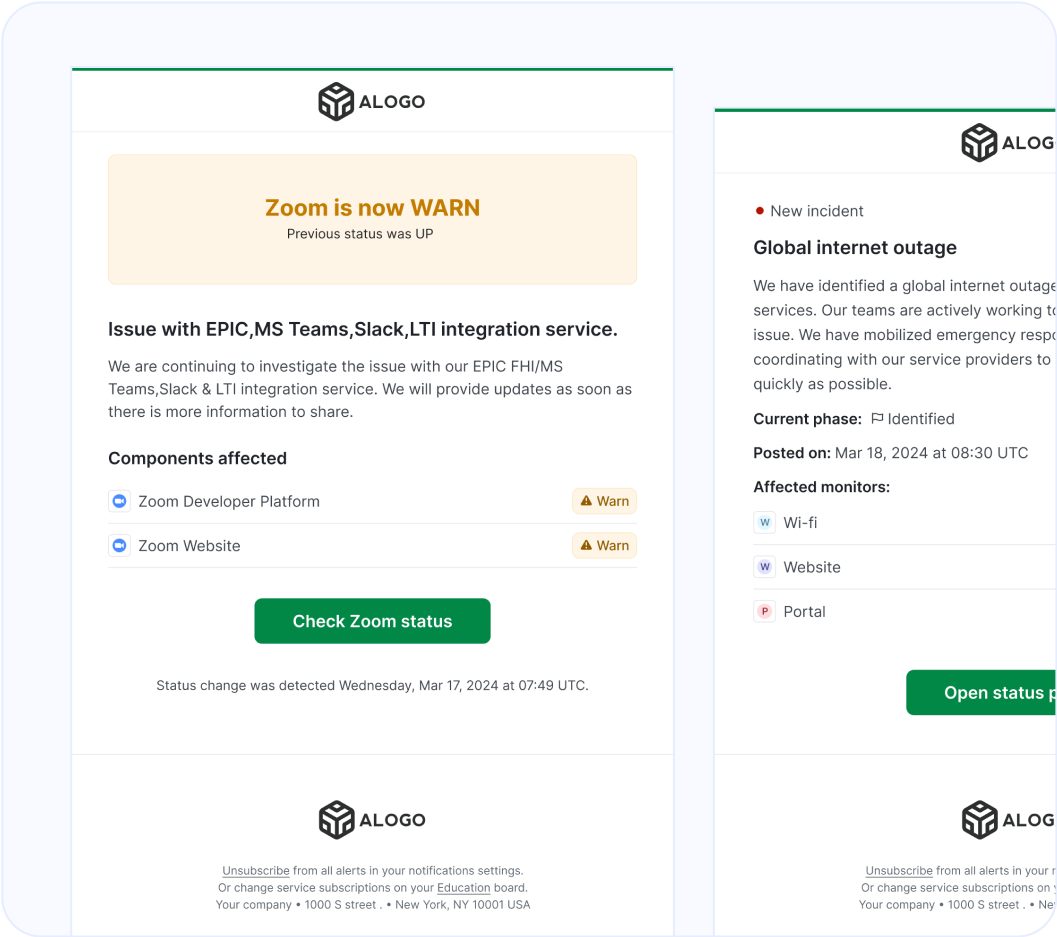
Why use outage monitors
Many incidents begin with a vendor-side disruption that your internal monitoring will not catch right away. That creates false escalation, duplicate debugging, and avoidable support noise while teams try to figure out whether the issue is internal or upstream.
- See vendor incidents faster.
- Reduce manual vendor checks.
- Avoid troubleshooting the wrong layer.
- Keep support and engineering on the same page.
- Respond before the incident becomes a customer-facing problem.
How Outage Monitors Differ
This page is about software outages, not power outages or utility interruptions. It is also different from deep network-telemetry tools, because the focus here is on vendor status pages and dependency awareness.
| Category | Focus |
|---|---|
| Power outage monitoring | Utilities, electricity, local physical infrastructure. |
| Network outage monitoring | Internet paths, network hops, and global telemetry. |
| Outage monitoring for software | Vendors, cloud services, SaaS tools, and APIs. |
Why StatusGator is the best outage monitor for SaaS
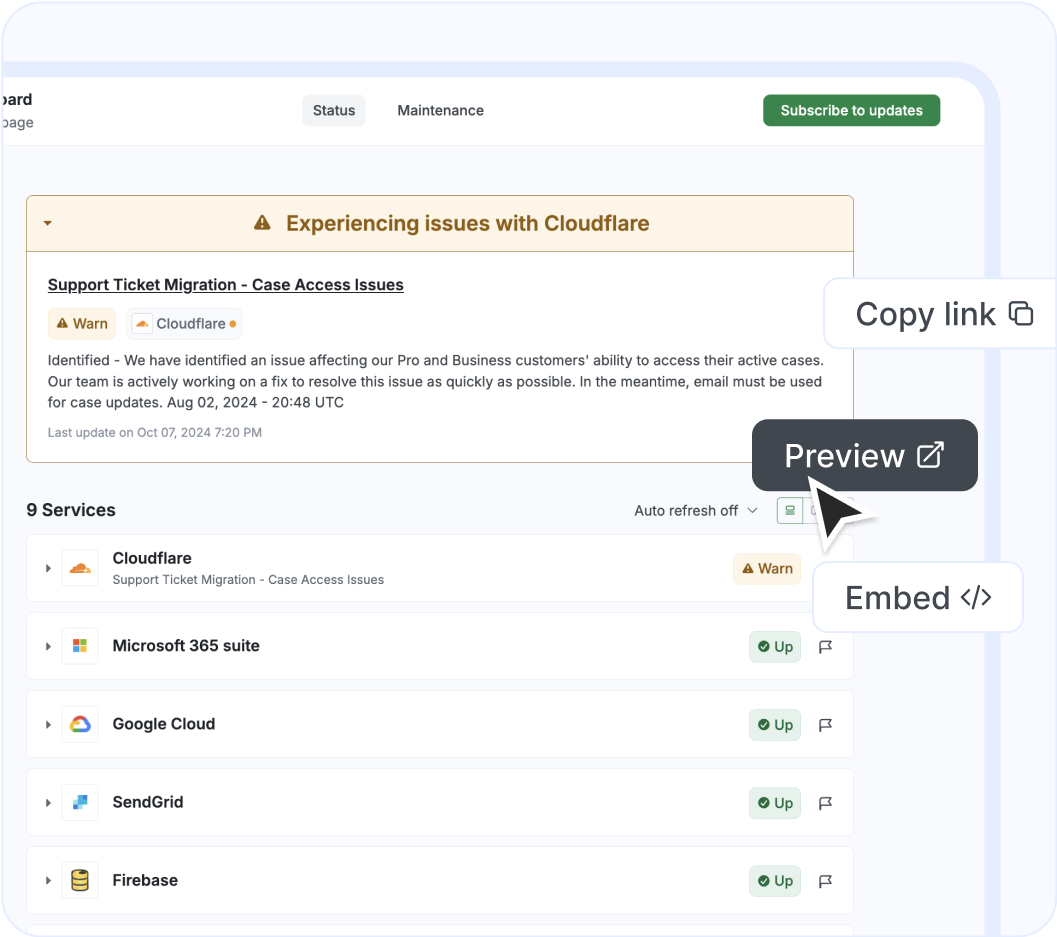
StatusGator is built for teams that need visibility into third-party outages. It collects official status updates, adds Early Warning Signals, and normalizes service health into a simple format so you can see what is working and what is not.
A real outage example
At around 3:40 PM ET, StatusGator began detecting a sudden spike in outage reports across multiple cloud applications and SaaS platforms connected to Amazon Web Services. Services ranging from AI tools to banking apps started showing signs of disruption as CloudFront and Route53 issues spread through the ecosystem.
At 4:07 PM ET, StatusGator issued an Early Warning Signal for AWS infrastructure disruption affecting CloudFront and Route53.
8 minutes later, AWS officially acknowledged the incident on its status page.
This kind of cascading visibility is important because teams need to understand not just:
"Is AWS down?"
but:
"Which dependencies are being affected right now?"
Incident Timeline
| 3:40 PM ET | StatusGator begins receiving elevated outage activity across multiple services |
| 4:07 PM ET | Early Warning Signal issued for AWS CloudFront and Route53 disruption |
| 4:13 PM ET | AWS officially acknowledges the incident |
| 4:46 PM ET | AWS reports signs of recovery |
| 4:59 PM ET | StatusGator still sees elevated outage activity across affected services |
Note: When a major cloud provider fails, the problem rarely stays isolated. Authentication systems, APIs, dashboards, AI platforms, payment flows, and customer-facing apps can all degrade at the same time.
How it works
Three simple steps to unified dependency visibility.
Add dependencies
Add the services you depend on.
Continuous monitoring
StatusGator watches official status pages and outage signals.
Get instant alerts
You get alerts in Slack, Teams, Google Chat, Discord, email, SMS, or webhooks.
Monitor outages before they become customer tickets
See service disruptions faster, reduce manual checking, and keep your team ahead of upstream failures.